Organic beeswax
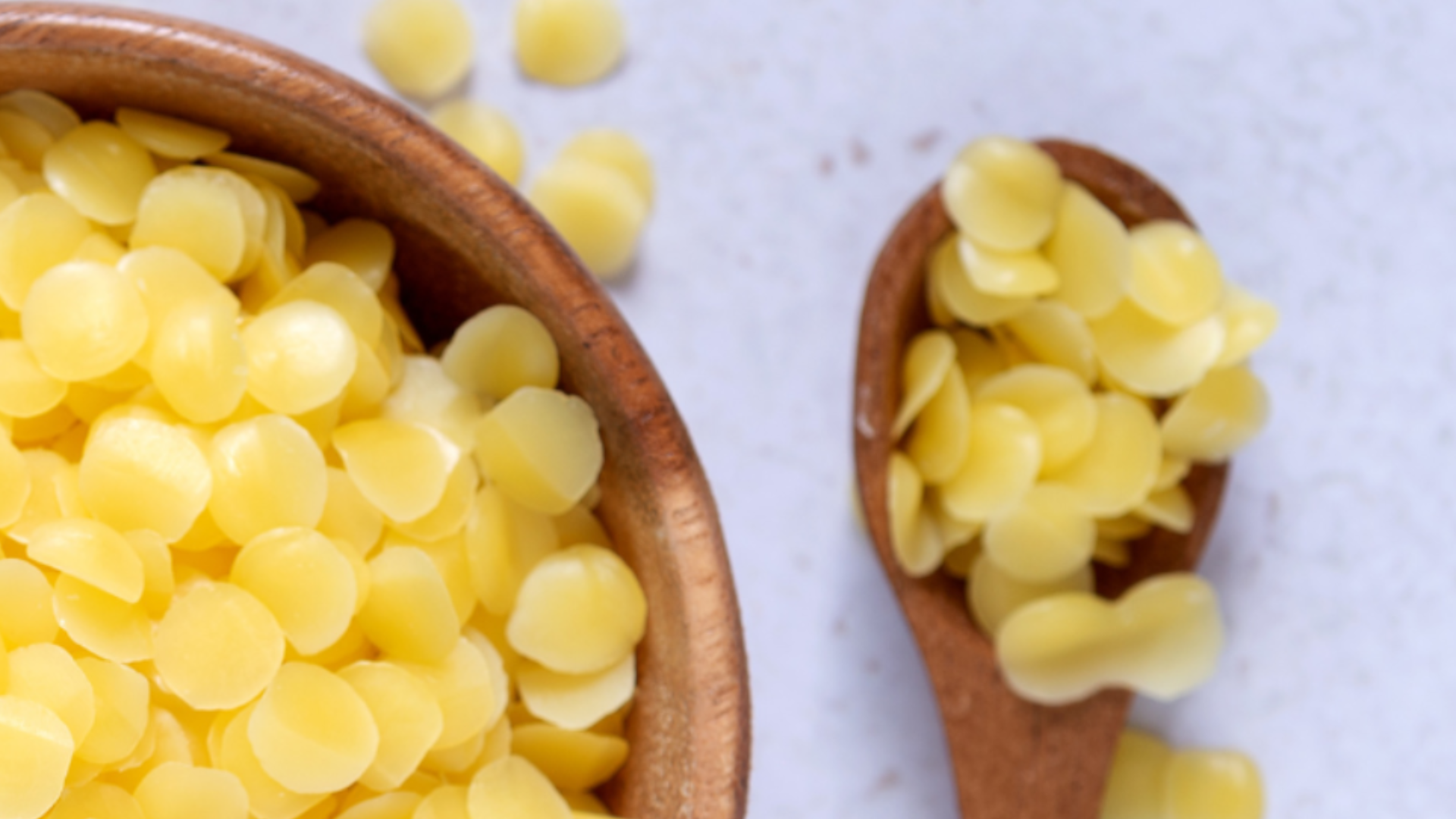
In addition to our regular beeswax, Chempri also offers an organic variant.
Organic beeswax is produced without the use of synthetic pesticides, herbicides or genetically modified organisms. Organic cultivation and processing ensure that the natural properties and integrity of the beeswax remain fully intact.
What is organic beeswax?
Organic beeswax is a natural wax produced by honeybees to build their honeycombs. The wax naturally consists of a complex composition including esters, fatty acids and hydrocarbons and has a characteristic solid structure.
The difference compared with white beeswax and yellow beeswax lies in its certified organic origin and the conditions under which beekeeping and processing take place. This makes organic beeswax interesting for manufacturers who consciously choose certified raw materials and want to position their end products as natural or organic.
Beeswax is available in various qualities and colours. Depending on the quality and processing, it can be used as a thickener, structuring agent, protective wax or consistency enhancer.
Packaging
Bag
CAS
8012-89-3
INCI-name
Cera
Application
Technical
Cosmetic
Pharmaceutical
Food
How is cera made?
The production of cera or beeswax begins in the beehive. Honeybees produce small wax scales through their wax glands, which they use to build the characteristic hexagonal cells of the honeycomb. These cells are used to store honey and pollen, among other things. Mature honey is then sealed by the bees with a thin layer of beeswax.
To obtain beeswax, the wax parts are collected from the beehive and cleaned of honey residues and other impurities. The wax is then heated and melted. By filtering and further purifying the liquid beeswax, clean beeswax is obtained that can be used as a raw material.
Depending on further processing and the desired specifications, beeswax can then be used in a wide range of products, for example in cosmetic, pharmaceutical, food and technical applications.
How organic beeswax works
Organic beeswax has a number of unique properties that make it a valuable product in various applications. Firstly, beeswax is known for its excellent spreadability and lubricating properties. It can be used as a natural lubricant for various machines and equipment. In addition, organic beeswax has a high melting point, making it resistant to high temperatures. This also makes it suitable for use in candles, where it ensures slow and even burning.
Organic cera in different industries
Organic cera is used in various industries due to its versatile properties.
Cosmetics industry
- Lip balms
- Creams
- Lotions
Beeswax is used as a structuring agent and consistency enhancer. In addition, the wax forms an occlusive layer on the skin, which can help reduce moisture loss.
Pharmaceutical industry
Beeswax acts as a binding agent for pills and tablets, helping to hold different ingredients together and ensure the firmness of the medicines. Due to the excellent compression properties and stability provided by organic beeswax, the pills are easier to swallow and remain intact during storage and transport.
Food industry
- Glazing agent for sweets, chocolate and other food products.
- Protection against moisture and extension of shelf life
It provides an attractive shine and ensures that the products look appetising.
Technical applications
- Lubricants and natural lubricant formulations
- Maintenance products for wood, leather and metal
- Polishes
- Protective coatings
Organic beeswax helps reduce friction between surfaces while forming a protective layer.
Besides organic beeswax we have other products in our range. Check it out on our insights page!
Frequently asked questions about organic beeswax
1. What was beeswax used for in the past?
One of the oldest examples dates back to the Stone Age. Archaeological findings indicate that beeswax was already being used in dental treatments at that time. The soft and malleable wax could be applied to damaged teeth, making it an early example of the practical use of beeswax.
Beeswax was also used as a sealing and protective agent. For example, it was applied to wooden materials and structures to better protect them against moisture. Beeswax was also used in shipbuilding because of its water-repellent properties.
During the Middle Ages, beeswax played an important role in candle production. Many cheaper candles at the time were made from animal fat, which could produce an unpleasant odour when burned. Beeswax offered an attractive alternative: it burned evenly and released a characteristic scent.
2. What is the difference between yellow and white beeswax?
Yellow beeswax naturally has a yellow to yellow-brown colour and retains more of the wax's original colour and scent characteristics. White beeswax is further purified and bleached, resulting in a lighter, more neutral raw material.
The choice mainly depends on the end application. Yellow beeswax is well suited to products where the natural appearance of the raw material is not an issue. White beeswax is more often chosen for formulations where the colour and appearance of the end product are important, for example in white or light-coloured cosmetic products.
3. What is the melting point of beeswax and why is this important during processing?
Beeswax has a melting point of approximately 62 to 65 °C. Its melting behaviour is relevant to the final hardness, structure and temperature stability of products such as balms, sticks or ointments. For exact values, the product specification of the relevant beeswax should therefore always be consulted.
4. When should I choose organic beeswax instead of regular beeswax?
Organic beeswax is particularly relevant when a certified organic origin forms part of the requirements or positioning of the end product. Examples include manufacturers of organic cosmetics or other products in which certified raw materials are deliberately used.
Chempri: your partner in organic beeswax
At Chempri, we specialise in the production and supply of oleochemicals and their derivatives, including organic beeswax (Cera).
Our products are manufactured at our modern production facility and can be adapted to the specific needs of our customers.
We support customers with:
- Consistent quality and product specifications
- Deliveries from Europe
- Technical support with product selection
- Flexible volumes
In addition, we provide advice on applications in specific formulations, alternatives and documentation (such as COA and product specifications).
Do you have any questions or would you like to order directly? Contact our sales department!