

Raw materials for lubricants
A good formulation starts with raw materials you can rely on. But equally important is a supplier who understands what you want to achieve with them.
Chempri has been working with (oleo)chemical raw materials for more than 40 years. During that time, we have built up extensive knowledge of our products and the applications in which they are used. We are happy to use this knowledge to work with customers to identify the right raw material for their formulation. Even when a customised solution is required.
We support manufacturers with raw materials for lubricants that meet specific requirements. These include emulsion stability, corrosion protection and performance under high temperatures or heavy loads.
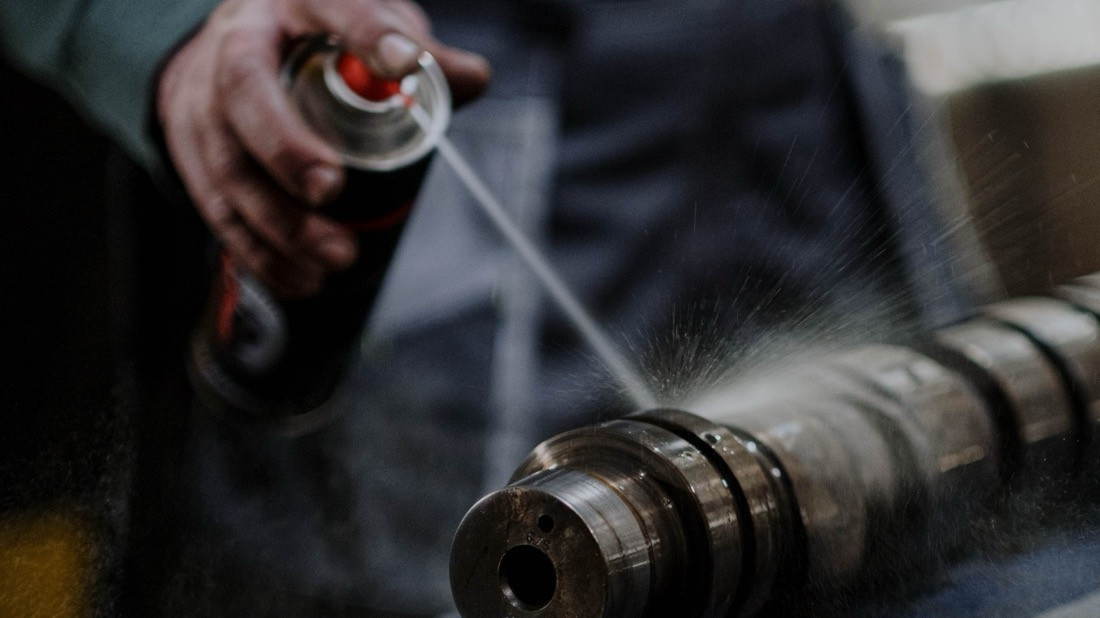
Our range includes esters, fatty acids, fatty alcohols and a wide range of surface-active products for applications such as:
- Hydraulic systems
- Wire drawing oils
- Compressor oils
- Gear oils
A lubricant depends on the right combination of raw materials. That is why, at Chempri, we look beyond product specifications alone. We want to understand what you use the product for, what challenges you face and which properties are decisive for your formulation.
Our technical and commercial colleagues communicate directly with each other and with you. This allows us to quickly advise on raw material selection, product specifications, alternatives and continuity of supply. And thanks to our connection with Mosselman's European oleochemical network, we have access to additional knowledge and capabilities when a request goes beyond our own product range.
Do you have a question or would you like to order? Contact our sales department!
Which raw materials for lubricants do I need?
The choice of the right raw materials for lubricants strongly depends on the application and the desired product properties. A metalworking fluid, for example, has different requirements in terms of emulsion stability and corrosion protection than a hydraulic oil, chain lubricant or biodegradable lubricating grease. It is therefore important to look beyond the properties of individual raw materials. It is precisely the interaction between them that determines how a formulation ultimately performs.
Depending on the application, different raw materials are used to influence properties such as lubrication, viscosity, emulsifiability and stability. Examples include castor oil, tall oil, olein, ethyl oleate and monopropylene glycol.
Are you looking for a specific raw material that is not part of our standard range? Thanks to our own production capabilities, in many cases we can adapt a product to specific needs or work with you to find another suitable solution.
For which lubricant applications does Chempri supply raw materials?
Factors such as load, temperature, moisture, pressure and the desired service life each place their own demands on lubricant formulations. Depending on the application, the focus may be on wear protection, oxidation stability, corrosion protection or stable viscosity.
Chempri supplies (oleo)chemical raw materials for a wide range of industrial lubricant applications, including:
- Metalworking fluids (cooling lubricants)
- Cutting and drilling oils
- Hydraulic oils
- Industrial lubricating oils
- Lubricating greases
- Chain lubricants
- Forming oils and release agents
- Biodegradable lubricants
Different product properties play a role within each application. For metalworking fluids, for example, emulsion stability and corrosion protection are important, while hydraulic oils place high demands on viscosity and oxidation stability.
Which raw material is most suitable therefore varies by application. Our specialists are happy to advise you on the properties required, which raw materials are suitable and what alternatives are available. Together, we can make a choice that suits your formulation and process.

Besides the lubricant industry, we serve many other industries with (oleo)chemical products!
Raw materials for lubricants: which properties determine the choice?
Manufacturers, formulators and purchasers look for raw materials that suit their formulation and production process. This involves questions such as:
- Is the quality of every delivery consistent?
- Are the required product specifications and safety information available?
- Can the raw material be supplied reliably, including over the longer term?
- Are alternatives available if a raw material changes or becomes less readily available?
- Does the raw material meet the requirements of my application?
For us, a good partnership does not end after the first order. Formulations change, raw materials can become less readily available and market requirements evolve. In such situations, we can respond quickly, precisely because we know our customers, their products and their applications.
Curious about what we can do for your formulation? Feel free to contact us. You will be in direct contact with someone who can provide you with expert advice.
Why do manufacturers choose Chempri as their supplier of raw materials for lubricants?
- More than 40 years of experience as a producer and supplier of (oleo)chemical raw materials
- Broad range of oils, fatty acids, fatty alcohols, esters and surface-active products, allowing customers to purchase different product groups from a single supplier
- In-house production facilities and laboratory support, enabling Chempri to advise on customised solutions that suit the intended application
- Direct contact, allowing technical questions and projects to be coordinated quickly
- Certified according to ISO 9001 and RSPO
- Support with alternative raw materials when products change or are temporarily in limited supply
Personal advice
What does this collaborative approach look like in practice? One of our customers, a lubricant manufacturer, was looking for a biobased raw material that met the desired viscosity, lubricating properties and sustainability requirements for a new product line. Based on the application, Chempri recommended a combination of castor oil and ethyl oleate. We also advised on the appropriate product specifications, packaging format and delivery conditions. This enabled the customer to develop the new product line using raw materials that met the technical requirements and desired sustainable positioning.
For us, this is precisely where the strength of collaboration lies. We work together to determine what is needed to create a good end product.
Frequently asked questions about raw materials for lubricants
1. Does Chempri also supply samples for formulation testing?
Depending on the raw material and application, samples are available so that manufacturers can assess the performance of an ingredient during product development or optimisation of an existing formulation.
2. Which packaging formats are available for raw materials for lubricants?
Depending on the product, raw materials are available in various packaging formats, such as bulk, IBCs, drums and bags.
3. Which documentation is available for raw materials for lubricants?
Depending on the raw material, product specifications, safety data sheets (SDS), technical data sheets (TDS) and Certificates of Analysis (CoA), among other documents, can be provided.
4. When should I choose a biobased raw material instead of a conventional raw material?
More and more manufacturers are exploring the use of biobased raw materials to meet sustainability objectives or changing market demand. Chempri advises customers on suitable alternatives and helps identify raw materials that meet the desired performance and application requirements.
5. Which raw materials are suitable for high-load applications?
Chempri supplies various raw materials that are used in industrial lubricants, including monopropylene glycol, ethyl oleate, calcium stearate and magnesium stearate. The final choice depends on factors such as load, temperature, viscosity and the desired performance of the end product.