Raw materials for inks and paints
A good ink, paint or coating formulation requires raw materials that suit the application and the production process. Chempri has been working with (oleo)chemical raw materials for more than 40 years and advises on the product choice that best fits these requirements.
Within our range, you will find various (oleo)chemical raw materials and surface-active products for ink, paint and coating formulations. We consider product specifications, technical documentation, possible alternatives and the requirements of your application.
Does a standard product not fully meet your needs? Where possible, we also explore customisation options.
Questions or would you like to order directly? Contact our sales department!
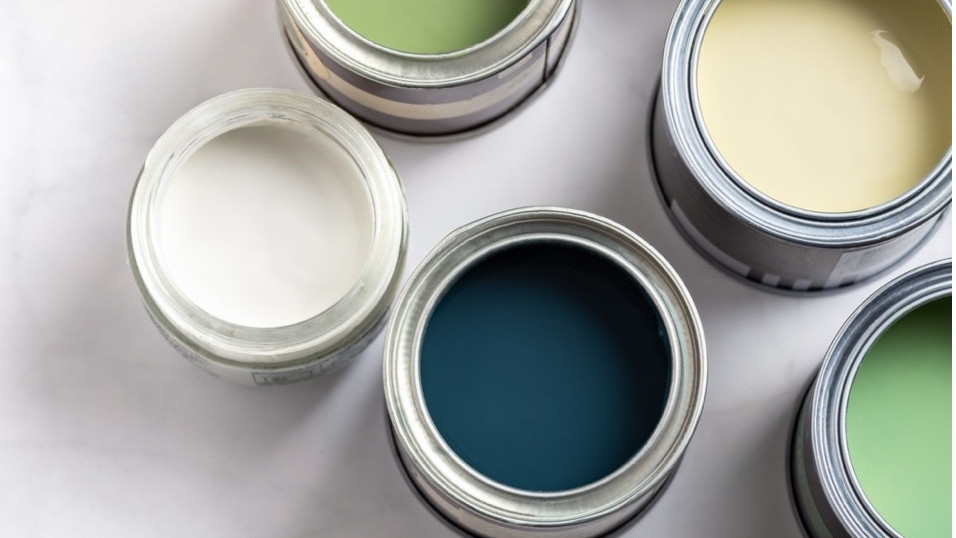
Raw materials for ink
Examples of raw materials we supply for ink formulations:
- Tall oil: Improves the viscosity and drying time of the ink, which is important for consistent and accurate application.
- Glycols, including propylene glycol: Can be used as a solvent in ink formulations.
- Olein N2: Can be used as a raw material for inks where good lubrication and flow properties are important.
Raw materials for paint
Examples of raw materials we supply for paint and coating formulations:
- Heliwet FA series: Non-ionic surfactants that improve the wetting, pigment dispersion and processing of paint.
- Castor oil: Used as a biobased raw material in various coatings and contributes to the desired processing properties.
- Calcium stearate: Used as an additive to improve processability and reduce unwanted sticking during production and processing.
Contact our sales department to discuss which product best suits your formulation.
How does Chempri select a suitable raw material?
For us, a good product choice starts with the application. That is why we first look together at what the raw material needs to do within the formulation and which conditions are important.
Important selection criteria may include:
- Ionic character
- Chemical composition
- Active content
- Solubility or dispersibility
- pH and electrolyte sensitivity
- Type of binder
- Pigment and additive package
- Processing temperature
- Foam profile
- Desired storage stability
- Applicable documentation or sustainability requirements
Based on these factors, we compare possible products and alternatives. The final choice is made together with the customer, whereby the raw material must always be tested in the customer’s own formulation and practical application.
In addition to the ink and paint industry, we supply many other industries with (oleo)chemical products!
Giving advice
What does this support look like in practice? One of our customers, a manufacturer of industrial printing inks, was looking for a raw material that better matched the desired drying time and flow properties of a new formulation. Chempri mapped out the product specifications and processing conditions and subsequently recommended tall oil as a suitable raw material. By assessing the application together, the customer was able to further optimise the formulation for the intended production process.
That is how we like to work: first carefully assess what is needed and then determine which raw material is the right fit.
Can Chempri help replace an existing raw material?
When an existing raw material becomes unavailable, the supplier changes or a product specification no longer fits, it is useful to be able to respond quickly. Our technical and commercial colleagues communicate directly with each other, allowing us to quickly discuss possible alternatives.
Relevant properties of the existing and potential new raw material are then compared. These may include chemical type, active content, ionic character, solubility, pH, viscosity and available quality documentation.
After the initial comparison, promising candidates can be selected for testing in the customer’s laboratory.
Why do ink and paint manufacturers choose Chempri?
- Specialist oleochemical knowledge
Chempri focuses entirely on oleochemical raw materials, derivatives and surface-active products. This allows us to provide targeted advice on suitable products for a wide range of ink, paint and coating formulations. - Support with product selection and alternatives
Based on product specifications, technical documentation and application requirements, we help select suitable products or offer possible alternatives to existing raw materials. - Possibility of product specification adjustments or customisation
Where technically feasible, we explore whether a product or product specification can be adapted to a formulation, production process or quality requirements. - Direct support
Thanks to our flexible organisation, communication lines are short. Technical questions, documentation requests and commercial coordination are handled through fixed points of contact, together with our internal sales team. - Reliable quality and certifications
Chempri operates according to a quality management system focused on the continuous improvement of products and processes. In addition, we are ISO 9001 and RSPO certified. - Access to a European oleochemical network
Thanks to our collaboration with Mosselman, a distributor of oleochemical ingredients, customers have access to a broader European network of oleochemical products, suppliers and additional supply options. - Flexibility for long-term B2B partnerships
We like to work with our customers over the long term. This allows us to get to know their products and applications and to provide support when a formulation changes or a different raw material is required.
Frequently asked questions about raw materials for inks and paints
1. What is the minimum order quantity for the raw materials?
This varies by product. Contact our sales department to discuss the options for the raw material you require. For some products, it is also possible to request a sample first.
2. How can I prevent pigment settling in a coating?
Pigment settling occurs when pigment particles settle during storage. Depending on the formulation, a rheology additive such as hydrogenated castor oil can help build more structure into the coating. When the cause is insufficient pigment wetting, a dispersant MPA or a suitable Heliwet FA surfactant may provide a solution.
3. My coating foams during production. What can I adjust?
Foam formation during mixing or pumping can lead to processing problems and a less uniform final result. The cause often lies in a combination of high stirring speeds, surfactants and the formulation of the system.
Depending on the application, silicone-based additives such as dimethicone can help reduce foam formation.
4. My coating has insufficient scratch resistance. Which additives can help?
The scratch resistance of a coating is influenced by the binder, curing and the additives used. Waxes and metal stearates are regularly used to improve wear resistance and surface properties.
Within Chempri’s range, calcium stearate, zinc stearate and magnesium stearate are among the available raw materials for technical applications. Depending on the formulation, these can contribute to improved slip properties, wear resistance and increased surface protection.
Chempri as a supplier of raw materials for inks and paints
No two formulations are the same. That is why, at Chempri, we first look at the application and what a raw material needs to do within it. From there, we advise on product specifications, alternatives and customisation.
Do you have a question about a raw material or would you like to discuss an application? Feel free to contact us. You will be in direct contact with someone who can provide you with expert advice.
Questions or would you like to order directly? Contact our sales department!