
Soybean oil refined
What is refined soybean oil?
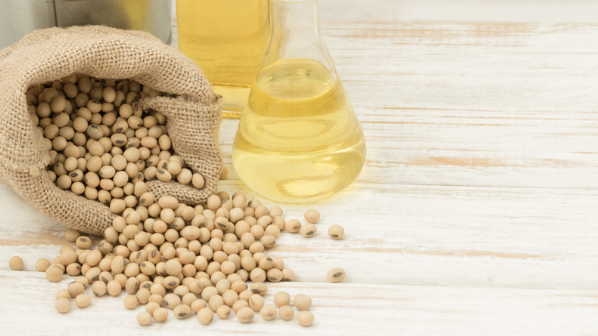
Refined soybean oil, also known as Glycine Soja Oil or refined soybean oil, is a vegetable oil extracted from soybeans (Glycine max). The oil undergoes a refining process in which unwanted components are removed. This results in a clear, light-coloured oil with a mild flavour that is suitable for a wide range of applications.
Refined soybean oil mainly contains unsaturated fatty acids, including linoleic acid (omega 6) and oleic acid (omega 9). In addition, soybean oil naturally contains vitamin E, although its content may decrease during refining.
Thanks to its composition and functional properties, refined soybean oil is used in:
-
Food products and culinary preparations
-
Cosmetic products such as creams, lotions and haircare products
-
Pharmaceutical formulations and supplements
-
Technical applications, including biodiesel, lubricants and bioplastics
-
Animal feed
-
Specific food formulations
Due to its versatility, refined soybean oil is a widely used vegetable-based raw material for manufacturers in various industries.
In addition to conventional refined soybean oil, Chempri also offers organic refined soybean oil. This variant is extracted from organically grown soybeans.
Packaging
Bulk
IBC
Drum
Can
CAS
8001-22-7
INCI-name
Glycine soja oil
Applications
Technical
Cosmetic
Pharmaceutical
Food
Animal feed
How is refined soybean oil produced?
Refined soybean oil is produced by extracting oil from soybeans and subsequently refining it. The refining process removes unwanted components, such as phospholipids, free fatty acids and pigments. This results in a pure, clear and relatively stable oil suitable for various applications.
The production process consists of the following steps:
-
Preparation of the soybeans: The soybeans are cleaned and usually crushed to facilitate oil extraction.
-
Heating and extraction: The beans are heated and pressed to release the oil. Oil can also be obtained through solvent extraction.
-
Degumming: Phospholipids and other gum-like components are removed from the crude soybean oil.
-
Neutralisation: Free fatty acids are removed or reduced to improve the quality and shelf life of the oil.
-
Bleaching: Pigments and other unwanted components are removed from the oil using suitable adsorbents.
-
Deodorisation: Volatile odour and flavour compounds are removed, giving the oil a milder smell and taste.
During the refining process, unwanted substances are reduced, giving refined soybean oil a clear colour, mild flavour and improved processability.
The result is a versatile vegetable oil that can be used as a raw material for food products, cosmetics, pharmaceutical formulations and technical products.
What properties does refined Glycine Soja Oil have and how does it work?
Refined soybean oil has various functional properties due to its fatty acid composition and the refining process. The oil contains a high proportion of unsaturated fatty acids, has a mild flavour and can be used as a conditioning ingredient, liquid oil component or industrial raw material.
Its function varies depending on the application.
1. Nutritional value and properties when heated
Refined soybean oil mainly contains unsaturated fatty acids, including linoleic acid and oleic acid. The oil also contains smaller amounts of alpha-linolenic acid (omega 3).
The refining process gives the oil a mild flavour and a relatively high smoke point. This makes food-grade refined soybean oil suitable for various culinary applications, including baking, roasting and frying.
A manufacturer of ready meals can use refined soybean oil as a vegetable fat source. Due to its mild flavour, the oil generally has a limited effect on the flavour profile of the final product.
2. Softening and conditioning properties
In cosmetic formulations, refined soybean oil acts as an emollient. This means that the oil helps keep the skin supple and reduces moisture loss through the skin's surface.
The unsaturated fatty acids contribute to its conditioning properties. In addition, the naturally occurring tocopherols can contribute to the oil's antioxidant properties.
Glycine Soja Oil can be incorporated into a body lotion to soften the skin and give the product conditioning properties.
The oil can also contribute to softer and more supple hair in haircare products.
3. Properties as a carrier oil
Refined soybean oil can be used as a liquid oil component or carrier oil in certain pharmaceutical formulations.
Thanks to its liquid structure, the oil is suitable for incorporating certain oil-soluble components.
When developing an oil-based supplement, pharmaceutical-grade refined soybean oil can serve as a carrier for a fat-soluble ingredient.
For such applications, the required purity, product specifications and stability determine its suitability.
4. Properties as an industrial raw material
Refined soybean oil is also a raw material for various technical products. The fatty acids in the oil can be chemically converted or processed into other materials.
As a result, soybean oil can be used in the production of:
-
Biodiesel
-
Vegetable-based lubricants
-
Bioplastics and bio-based polymers
-
Other technical oil and fatty acid derivatives
In biodiesel production, triglycerides from soybean oil can be converted into fatty acid methyl esters through transesterification. These form a component of biodiesel.
Suitability for a technical application depends on the desired chemical composition and performance of the final product.
In which industries is refined Glycine Soja Oil used?
Refined soybean oil is used in various industries due to its wide range of applications, mild flavour and functional properties.
The food industry
In the food industry, refined soybean oil is used as a vegetable oil for the preparation and production of food products.
Examples of applications include:
-
Baking, roasting and frying
-
Ready meals
-
Sauces and dressings
-
Margarines and fat blends
-
Bakery products
-
Other processed food products
The exact processing temperature and suitability depend on the product specifications and conditions of use.
Technical applications
In the technical industry, refined soybean oil is used as a vegetable-based raw material for various products.
Examples of applications include:
-
Biodiesel production
-
Vegetable-based lubricant formulations
-
Bioplastics and bio-based materials
-
Oil-based technical formulations
-
Raw material for chemical conversion processes
In bioplastics, soybean oil derivatives can be incorporated into polymers and other bio-based materials.
Due to its plant-based origin, soybean oil may be of interest to manufacturers looking to use renewable raw materials.
The pharmaceutical industry
In the pharmaceutical industry, refined Glycine Soja Oil can be used as an oil component in certain formulations and supplements.
Examples of potential applications include:
-
Oil-based dietary supplements
-
Formulations containing fat-soluble ingredients
-
Certain pharmaceutical carrier systems
-
Topical oil-based preparations
The cosmetics industry
In the cosmetics industry, Glycine Soja Oil is valued for its softening and conditioning properties.
The oil is incorporated into products including:
-
Facial creams and body lotions
-
Facial and body oils
-
Skincare serums
-
Hair masks and conditioners
-
Hair oils
-
Massage products
Animal feed
Refined Glycine Soja Oil of suitable quality can be used as a vegetable fat source in animal feed.
The oil provides energy and contains unsaturated fatty acids that are relevant to the composition of the feed.
Examples of applications include:
-
Compound feeds
-
Complementary feeds
-
Energy-enriched feed mixtures

Besides soybean oil refined, we have other products in our range. Check it out on our insights page!
Frequently asked questions about soybean oil refined
1. What are the benefits of refined soybean oil?
Refined soybean oil offers several benefits for manufacturers in various industries.
The main benefits include:
-
Plant-based origin
-
High content of unsaturated fatty acids
-
Clear, light colour
-
Mild flavour and odour
-
Wide range of applications in food products and industrial formulations
-
Suitable as an oil component in certain cosmetic and pharmaceutical products
-
Usable as a raw material for chemical conversion processes
The refining process removes unwanted components, making the oil suitable for a wide range of applications.
2. Wat zijn de nadelen en aandachtspunten van geraffineerde sojaolie?
Bij het gebruik van geraffineerde sojaolie moet rekening worden gehouden met verschillende eigenschappen.
- Oxidatiegevoeligheid: door het relatief hoge aandeel onverzadigde vetzuren kan de olie bij blootstelling aan zuurstof, warmte en licht oxideren.
- Houdbaarheid: de olie moet onder geschikte omstandigheden worden opgeslagen.
- Verlies van bestanddelen: tijdens raffinage kunnen natuurlijke componenten, waaronder bepaalde antioxidanten, gedeeltelijk worden verwijderd.
- Toepassingsspecifieke eisen: voor voeding, farmacie, cosmetica en techniek kunnen verschillende productspecificaties gelden.
Ook allergeneninformatie en eventuele GMO-gerelateerde eisen kunnen relevant zijn, afhankelijk van de toepassing en afzetmarkt.
3. What is the difference between refined and unrefined soybean oil?
The main difference is the degree of processing.
Unrefined soybean oil has not yet been fully purified after extraction and therefore contains more of the originally present accompanying components.
Refined soybean oil undergoes several purification steps, including degumming, neutralisation, bleaching and deodorisation.
As a result, refined soybean oil generally has:
-
A lighter colour
-
A milder odour and flavour
-
A lower content of certain unwanted components
-
Better suitability for various processing methods
The choice between the two oils depends on the desired properties and application.
4. Is refined soybean oil suitable for baking and frying?
Food-grade refined Glycine Soja Oil can be used for baking, roasting and frying.
Due to the refining process, the oil has a relatively high smoke point and a mild flavour.
However, prolonged or repeated heating can lead to the formation of oxidation and degradation products. Therefore, the processing temperature, duration of use and quality of the oil are important.
For professional food production, the processing conditions must be aligned with the product specifications.
5. How should refined soybean oil be stored?
Refined soybean oil is best stored in a tightly sealed container, protected from heat, direct sunlight and prolonged exposure to oxygen.
These conditions help minimise oxidation and loss of quality.
For business customers, it is important to follow the recommended storage conditions and shelf life stated in the product specifications.
Chempri: your partner in refined soybean oil
Chempri specialises in the production and supply of oleochemicals and their derivatives, including refined soybean oil (Glycine Soja Oil).
Our products are manufactured at our modern production facility and can be adapted to the specific needs of our customers.
We support business customers with enquiries about:
-
Product properties and applications
-
Technical specifications and documentation
-
Available packaging options
-
Product selection and availability
-
Contract manufacturing options
Do you have any questions about refined soybean oil, would you like to receive product specifications or place an order directly?