Shea butter
What is shea butter?
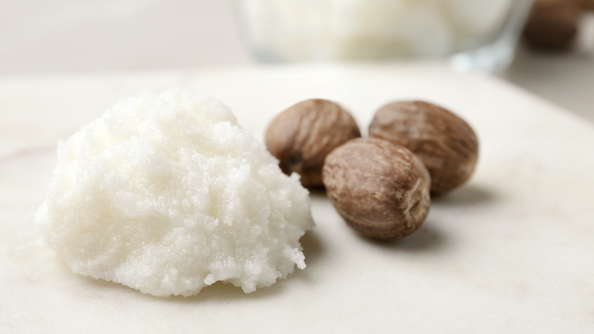
Shea butter, also known as Butyrospermum Parkii Butter, shea butter or karité butter, is a natural vegetable fat extracted from the nuts of the shea tree (Vitellaria paradoxa). This tree grows mainly in the savannah regions of West Africa. Shea butter is known for its nourishing, softening and protective properties and has been used for skin and hair care for centuries.
Shea butter contains a high proportion of fatty acids, including oleic acid, stearic acid and linoleic acid. In addition, the fat naturally contains unsaponifiable components, including tocopherols and other substances that contribute to its properties.
Thanks to this composition, shea butter is suitable for various applications:
-
Skincare products such as creams, body lotions and body butters
-
Lip balms and other conditioning balms
-
Soaps and haircare products
-
Food products and confectionery
-
Specific fat blends as an alternative to cocoa butter
Due to its solid to semi-solid consistency at room temperature and its melting behaviour, shea butter is a versatile raw material for manufacturers in the cosmetics and food industries.
For formulations where organic raw materials are desired, we also offer organic shea butter.
Packaging
Box
Bucket
CAS
91080-23-8
INCI-name Butyrospermum Parki Butter
Applications
Cosmetic
Food
How is shea butter produced?
Shea butter is produced from the nuts of the shea tree (Vitellaria paradoxa). The traditional production process involves drying, crushing, roasting and grinding the nuts, after which the fat is extracted through kneading and heating.
The production process consists of the following steps:
-
Collection of shea nuts: The nuts of the shea tree are collected and prepared for processing.
-
Drying and crushing: The nuts are dried and crushed to release the kernels.
-
Roasting: The kernels are roasted as part of the traditional fat extraction process.
-
Grinding: The roasted kernels are ground into a paste.
-
Kneading and heating: The paste is kneaded and heated, releasing the fat so that it can be separated.
-
Processing into shea butter: The extracted fat is further processed and cooled into a butter-like substance.
This process produces a vegetable fat with a characteristic structure and composition.
The final colour, odour, consistency and purity of shea butter may vary depending on further processing.
What properties does Butyrospermum Parkii Butter have and how does it work?
Shea butter has softening, conditioning and protective properties thanks to its fatty acid composition. In addition, the fat has characteristic melting behaviour, making it suitable for both cosmetic formulations and food products.
The function of shea butter varies depending on the application.
1. Softening and protective properties
In cosmetic products, shea butter acts as an emollient. This means that the fat helps keep the skin supple and reduces moisture loss through the skin's surface.
The presence of oleic acid, stearic acid and linoleic acid, among others, contributes to its conditioning properties. Shea butter can form a protective layer on the skin, helping to prevent it from drying out.
This makes shea butter suitable for products designed to care for dry or sensitive skin.
Practical example: In a body butter, shea butter can contribute to a rich texture and a long-lasting soft skin feel. In a lip balm, the fat helps keep the lips supple and protects them from drying out.
2. Structuring and melting properties
Shea butter has a solid to semi-solid consistency at room temperature. When heated, the fat softens and gradually melts.
This property makes shea butter suitable as a structuring ingredient in various formulations.
In cosmetic products, shea butter can contribute to:
-
A firmer or creamier texture
-
Pleasant spreadability
-
The consistency of balms and body butters
-
The melting behaviour of the final product
Practical example: When developing a lip balm, shea butter can be combined with vegetable oils and waxes to achieve the desired hardness and spreadability.
3. Haircare properties
Shea butter is also used in haircare products for its softening and conditioning properties.
The fat can help reduce the feeling of dryness and make the hair feel more supple and smoother.
Practical example: In a hair mask, shea butter can be used to condition dry hair and improve combability.
4. Properties as a vegetable fat in food products
In the food industry, shea butter is valued for its fatty acid composition, consistency and melting behaviour.
The presence of stearic acid and oleic acid makes shea butter suitable for certain fat blends used in the production of chocolate and other confectionery products.
Practical example: A confectionery manufacturer can incorporate food-grade shea butter or a suitable fraction thereof into a fat blend to achieve the desired melting behaviour and mouthfeel.
Its suitability as an alternative to cocoa butter depends on the composition, processing and applicable food legislation.
In which industries is Butyrospermum Parkii Butter used?
Shea butter is mainly used in the cosmetics and food industries. The combination of its plant-based origin, conditioning fatty acids and characteristic consistency makes the fat suitable for a wide range of formulations.
The cosmetics industry
In the cosmetics industry, shea butter is a widely used ingredient due to its moisturising, softening and protective properties.
The fat is incorporated into products including:
-
Facial creams and body lotions
-
Body butters and conditioning balms
-
Lip balms
-
Hand and foot creams
-
Soaps
-
Hair masks and conditioners
In addition, shea butter contains natural components, including tocopherols, which may have antioxidant properties.
The food industry
In the food industry, shea butter is used as a vegetable fat in certain food products, particularly in the production of chocolate and confectionery.
Examples of applications include:
-
Chocolate and certain chocolate products
-
Confectionery
-
Vegetable fat blends
-
Cocoa butter equivalents
-
Other food formulations where specific melting behaviour is desired
Due to their stearic acid and oleic acid content, suitable shea fractions can be used to influence properties such as hardness, melting behaviour and mouthfeel.
In chocolate production, fat crystallisation is particularly important for the structure and melting behaviour of the final product.
The use of shea butter as an alternative to cocoa butter may therefore be of interest to manufacturers looking to adjust the composition and processing properties of their products.
Besides shea butter, we have other products in our range. Check it out on our insights page!
Frequently asked questions about shea butter
1. What are the benefits of shea butter?
Butyrospermum Parkii Butter offers several benefits thanks to its natural fatty acid composition and characteristic structure.
The main benefits include:
-
Plant-based origin
-
Rich in fatty acids such as oleic acid and stearic acid
-
Softening and conditioning properties
-
Helps reduce moisture loss through the skin
-
Suitable as a structuring ingredient
-
Versatile applications in cosmetics
-
Suitable for specific fat blends in the food industry
For manufacturers, shea butter offers opportunities to combine conditioning properties with the desired consistency and melting behaviour.
2. What are the disadvantages and considerations of shea butter?
When processing shea butter, several properties should be taken into account.
-
Consistency: Shea butter is relatively firm at room temperature and must be heated for certain applications.
-
Crystallisation: Improper processing or cooling can result in a grainy texture.
-
Variation in quality: Colour, odour and composition may vary.
-
Application-specific requirements: Cosmetic and food-related applications have different quality requirements.
Proper processing and storage are therefore important for a consistent final product.
3. Does shea butter provide natural protection against UV radiation?
Shea butter contains natural components that have been linked to certain protective properties in research.
However, this does not mean that shea butter alone provides sufficient protection against harmful UV radiation.
For sunscreen products, UV protection and the stated SPF value must be demonstrated through appropriate testing.
Shea butter can be used in sunscreen formulations for its conditioning properties, but should not be considered a replacement for approved UV filters without supporting evidence.
4. How should shea butter be stored?
Butyrospermum Parkii Butter is best stored in a tightly sealed container, protected from direct sunlight, heat and significant temperature fluctuations.
Significant temperature fluctuations can affect the crystal structure and, consequently, the texture of the fat.
For business customers, it is important to follow the recommended storage conditions and shelf life stated in the product specifications.
Chempri: your partner in shea butter
Chempri specialises in the production and supply of oleochemicals and their derivatives, including shea butter (Butyrospermum Parkii Butter).
Our products are manufactured at our modern production facility and can be adapted to the specific needs of our customers.
We support business customers with enquiries about:
-
Product properties and applications
-
Technical specifications and documentation
-
Available packaging options
-
Product selection and availability
-
Contract manufacturing options
Do you have any questions about shea butter, would you like to receive product specifications or place an order directly?