Betaine AAB (Cocamidopropyl Betaine)
What is Betaine AAB?
Betaine AAB, also known as Cocamidopropyl Betaine (CAPB), is an amphoteric surfactant widely used in personal care and cleaning products. It is produced from fatty acids (often derived from coconut oil) and an amine compound.
Due to its amphoteric structure, Betaine AAB can behave as both an anionic and cationic substance, depending on the pH. This makes it a versatile and mild surfactant.
Key properties:
- Good foaming properties
- Mild cleansing performance (low irritation potential)
- Antistatic properties
- Compatible with other surfactants
The product is typically supplied as a light yellow to yellowish liquid with a nearly neutral pH.
Packaging
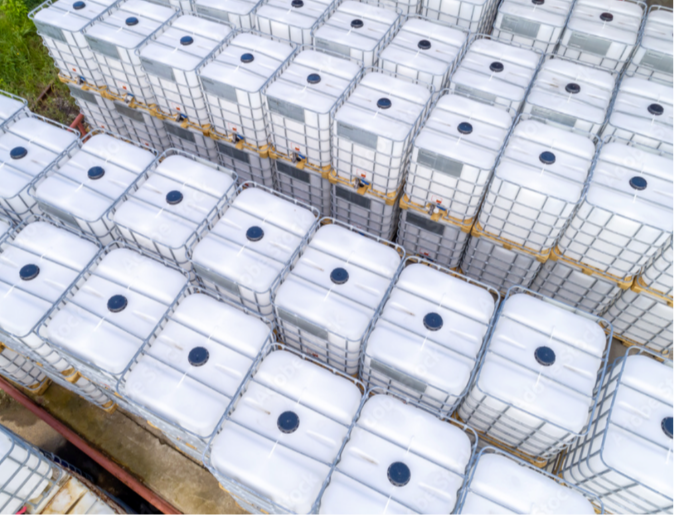
IBC
Vat
Can
CAS
97862-59-4
INCI-name
Cocamidopropyl Betaine
Application
Technical
Cosmetic
How is Cocamidopropyl Betaine produced?
Cocamidopropyl Betaine is produced through a multi-step chemical process based on fatty acids derived from coconut oil.
The process consists of:
- Formation of amidoamine: coconut fatty acids react with dimethylaminopropylamine (DMAPA).
- Quaternization (betaine formation): the amidoamine reacts with monochloroacetic acid (MCAA), creating the amphoteric structure.
- Purification and standardization: the product is purified and adjusted to specification (active matter content, salt level, color).
Within Europe, this process is carried out according to strict quality and safety standards (such as REACH), with particular attention to residual substances such as free amines.
How does Betaine AAB work in a formulation?
Betaine AAB (Cocamidopropyl Betaine) functions as a multifunctional surfactant that influences formulation performance in terms of foam, mildness, and system stability.
1. Interaction with other surfactants (co-surfactant)
Cocamidopropyl Betaine is rarely used as the sole surfactant, but rather in combination with surfactants such as anionic surfactants like SLES.
The effect:
- Reduces the irritation potential of harsher surfactants
- Improves foam structure (finer and more stable foam)
- Increases the viscosity of the formulation
For example, in a standard shampoo formulation containing SLES, the addition of Cocamidopropyl Betaine creates a milder formulation with thicker and creamier foam.
2. Mildness and skin compatibility
Due to its amphoteric structure, Cocamidopropyl Betaine can adapt to the pH of the system. As a result, it is less aggressive to the skin and eyes than many anionic surfactants.
The effect:
- Less degreasing of the skin
- Helps maintain natural skin lipids
- Suitable for sensitive applications
For example, in baby shampoo, Betaine AAB is used to enable cleansing without disrupting the skin barrier.
3. Foam stabilization
Cocamidopropyl Betaine stabilizes foam.
The effect:
- Foam remains intact for a longer time
- Better performance in hard water
- More consistent user experience
For example, in shower gels, it helps prevent foam from collapsing quickly during use.
4. Conditioning and antistatic effect
Its molecular structure allows interaction with hair.
The effect:
- Reduction of static charge
- Improved combability
- Reduced frizz
For example, in 2-in-1 shampoos, it contributes to a smoother hair feel without the need for a separate conditioner.
Questions or do you want to place an order? Contact our sales team!
In which industries is Cocamidopropyl Betaine used?
Cocamidopropyl Betaine is widely used in cosmetic, industrial, textile, and agricultural applications.
Cosmetics & personal care
- Shampoos
- Shower gels
- Facial cleansers
- Products for sensitive skin
It provides foaming, mild cleansing, and conditioning properties.
Household and industrial cleaning
- All-purpose cleaners
- Kitchen cleaners
- Degreasers
Due to its cleansing and degreasing properties, Betaine AAB helps remove stubborn dirt and grease.
For example, in kitchen cleaners, it helps loosen grease residues from surfaces.
Textile industry
In the textile industry, Cocamidopropyl Betaine is used as an auxiliary agent in textile dyeing processes. Due to its surface-active properties, dyes are distributed and absorbed more evenly by textile fibers. This results in a more uniform color and helps prevent stains and streaks.
Agriculture
A lesser-known application of Betaine AAB is its use in agriculture. Here, it is used as an additive in crop protection products to help protect crops against fungi and diseases. It improves the adhesion of crop protection agents to plant leaves, allowing the active substances to perform more effectively.
Besides Betaine AAB we have other products in our range. Check it out on our insights-page!
Frequently asked questions about Betaine AAB
1. What are the advantages of Cocamidopropyl Betaine?
- Good foaming properties
- Mild and skin-friendly
- Antistatic effect in hair care applications
- Versatile across multiple industries
- Compatible with other surfactants
2. What are the considerations when using Cocamidopropyl Betaine?
- May contain traces of DMAPA (relevant for sensitive applications)
- Not considered fully “natural” under strict certification standards
- Quality and purity can vary between manufacturers
3. What is the difference between Cocamidopropyl Betaine and anionic surfactants?
Cocamidopropyl Betaine is an amphoteric surfactant and is therefore milder than many anionic surfactants such as SLS or SLES. It is often added to balance cleansing performance and improve the skin compatibility of a formulation.
4. Is Cocamidopropyl Betaine suitable for sulfate-free formulations?
Yes, but usually not as the sole surfactant. In sulfate-free systems, Betaine AAB is often combined with:
- Glucosides (e.g. decyl glucoside)
- Other mild surfactants
In these formulations, it contributes to foam performance and mildness, but does not provide sufficient cleansing power on its own.
Chempri: your partner in Betaine AAB
Chempri supplies Betaine AAB (Cocamidopropyl Betaine) as part of a broad portfolio of oleochemicals and surfactants.
We support customers with:
- Deliveries from Europe
- Consistent quality and product specifications
- Technical support for formulation development
- Flexible volumes
In addition, we assist with product selection and alternatives, documentation (COA, TDS), and application advice for specific industries.
Do you have questions or would you like to place an order directly? Please contact our sales department.