Raw materials for the cosmetics industry
The development of a successful cosmetic product starts with selecting the right raw materials. However, product developers, formulators, and procurement professionals often face the same challenge: how do you source ingredients that not only deliver the desired performance but also meet quality standards, regulatory requirements, sustainability objectives, and supply security?
Chempri supports cosmetics manufacturers in selecting the right raw materials for their formulations. As a specialist supplier of (oleo)chemical ingredients, we offer a broad portfolio of surfactants, fatty alcohols, fatty acids, and other functional ingredients. Through our personal approach, tailored solutions, and access to Mosselman's European oleochemical network, we support customers throughout the product development process while ensuring long-term security of supply.
Which raw materials are used in cosmetic formulations?
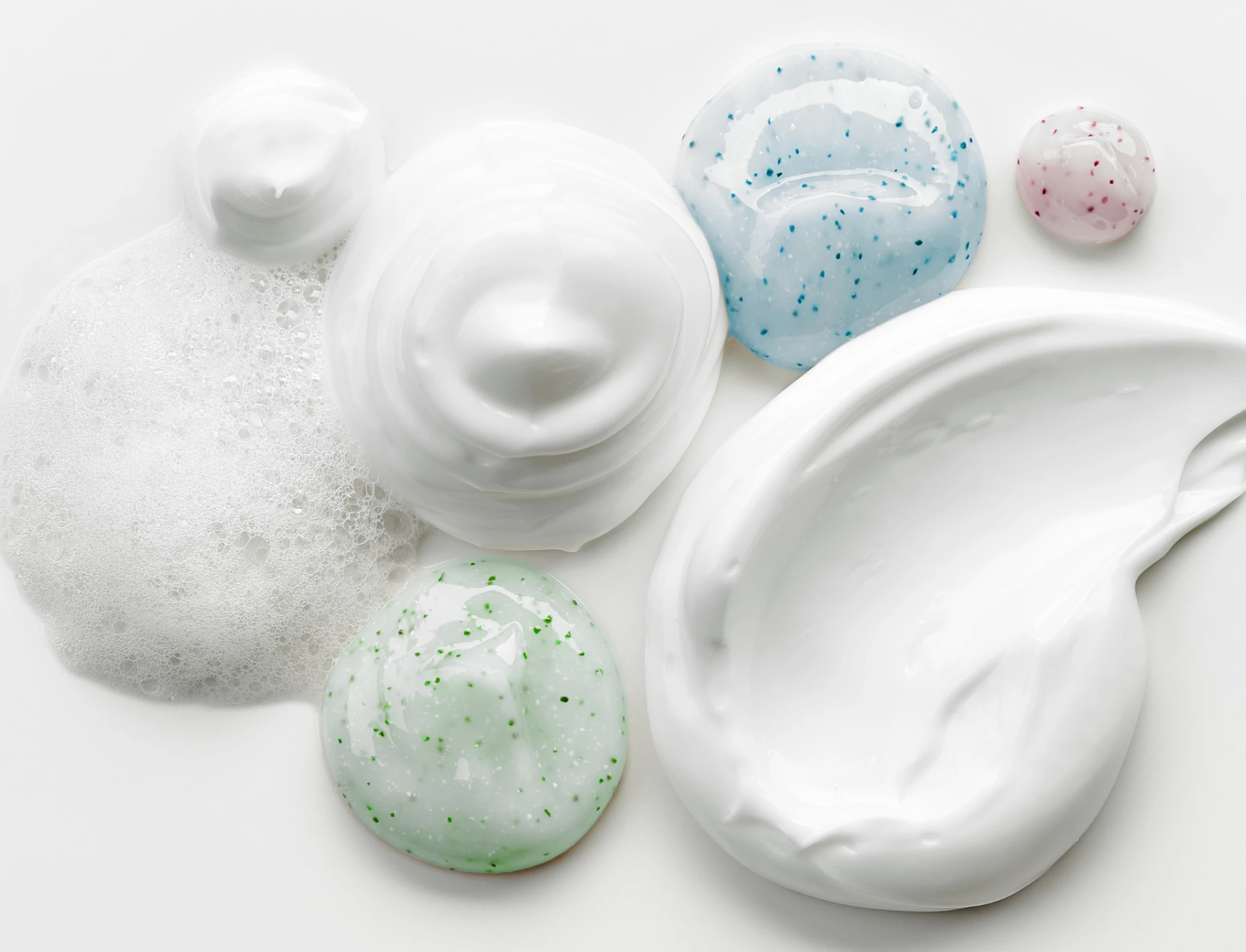
Cosmetic formulations consist of various types of raw materials, each serving a specific function. These include:
- Fatty alcohols
- Fatty acids
- Emulsifiers
- Surfactants
- Humectants
- Thickeners
- Emollients
- Solubilisers
Many of these cosmetic ingredients are derived from natural oils and fats and form the foundation of skincare, haircare, and cleansing products.
Chempri supplies both oleochemical ingredients and complementary chemical raw materials that contribute to stable, effective, and high-performance cosmetic formulations.
Besides the cosmetic industry, we serve many other industries with (oleo)chemical products!
Which cosmetic applications does Chempri supply raw materials for?
Chempri's raw materials are used in a wide range of cosmetic products, including facial creams, body lotions, shampoos, conditioners, cleansing products, lip care products, and many other personal care formulations.
As every formulation requires different performance characteristics, we support our customers in selecting the most suitable raw materials for their specific application.
What functions do chemical raw materials perform in cosmetic formulations?
Depending on the formulation, ingredients may be responsible for:
- Emulsifying oil and water
- Moisturising the skin
- Creating foam
- Improving spreadability
- Increasing viscosity
- Stabilising emulsions
- Cleansing the skin and hair
How do emulsifiers work in creams and lotions?
Oil and water do not naturally mix. Emulsifiers enable these two phases to form a stable emulsion.
As a result, creams, lotions, and serums remain homogeneous and maintain their texture throughout the product's shelf life.
Chempri's portfolio includes a wide range of surfactants and emulsifiers suitable for both oil-in-water (O/W) and water-in-oil (W/O) emulsions.
For product developers, selecting the right emulsifier is essential for achieving the desired stability, skin feel, and processing characteristics.
How do humectants improve skincare products?
Humectants help the skin retain moisture.
Ingredients such as glycerine are widely used in:
- Facial skincare products
- Hand creams
- Body lotions
- Cleansing products
By attracting and retaining water, these ingredients contribute to improved skin hydration and a better user experience.
Glycerine is one of the most widely used ingredients in the global cosmetics industry and serves as a key building block for many cosmetic formulations.
Which raw materials provide viscosity and stability?
Consumers expect cosmetic products to have a consistent texture and reliable performance.
For this reason, a variety of ingredients are used to provide thickening, stabilisation, and structural support.
Fatty alcohols often play an important role, serving as co-emulsifiers and structuring agents in creams, lotions, and conditioners.
By combining fatty alcohols with emulsifiers and other functional ingredients, formulators can create stable formulations with the desired viscosity and texture.
Which ingredients are used for cleansing and foam formation?
Cleansing products typically contain surfactants that help remove dirt, oils, and other impurities from the skin and hair.
These ingredients are commonly used in products such as:
- Shampoos
- Shower gels
- Facial cleansers
- Hand soaps
One of the main formulation challenges is achieving the right balance between cleansing performance, foam generation, and mildness for the skin and hair.
Chempri supplies a wide range of surfactant ingredients that help achieve this balance, including glucosides, betaines, sulfates, and amine oxides, enabling product developers to combine multiple performance characteristics within a single formulation.
What requirements does the cosmetics industry place on raw materials?
Cosmetics manufacturers place high demands on both their suppliers and the raw materials they use.
Key considerations include:
- Quality
- Traceability
- Security of supply
- Technical documentation
- Regulatory compliance
- Sustainability
- Batch-to-batch consistency
Chempri operates a comprehensive quality management system focused on the continuous improvement of both products and organisational processes.
In addition, we are certified to ISO 9001 and RSPO standards. For organic products, Chempri also holds Skal organic certification.
Raw materials cosmetics industry
Why do cosmetics manufacturers choose Chempri?
Many companies supply cosmetic raw materials. Customers choose Chempri because of our expertise, reliability, and long-term commitment.
Specialist expertise in oleochemicals
Chempri has a strong focus on oleochemistry and extensive expertise in fatty alcohols, fatty acids, surfactants, and their derivatives.
Comprehensive surfactant portfolio
Chempri supports a wide variety of cosmetic formulations with a broad portfolio of surfactants and other functional ingredients.
Tailored solutions
Standard products are not always the ideal solution. That is why we offer the flexibility to adapt products to meet specific technical, commercial, or logistical requirements.
Direct access to technical specialists
As a compact organisation, Chempri enables customers to communicate directly with specialists who have in-depth product and market knowledge.
Focus on long-term partnerships
Many of our customers have partnered with Chempri for years. Building long-term relationships based on trust and reliability is at the heart of our approach.
Frequently asked questions about cosmetic raw materials
Which fatty alcohols are commonly used in cosmetic products?
Commonly used fatty alcohols include cetyl alcohol, stearyl alcohol, and cetearyl alcohol.
These ingredients are widely used as thickeners, co-emulsifiers, and structuring agents in creams, lotions, and hair care products.
What is the difference between a fatty alcohol and a fatty acid?
Fatty alcohols are primarily used to provide structure, stability, and texture in cosmetic formulations.
Fatty acids, on the other hand, are more commonly used as raw materials for soap production, emulsifiers, and other functional derivatives.
What documentation is available for cosmetic raw materials?
Depending on the product, Chempri can provide documentation such as:
- Safety Data Sheets (SDS)
- Technical Data Sheets (TDS)
- Product specifications
- Certificates
- Quality documentation
Does Chempri provide samples for product development?
Samples are available for many products, allowing formulators and product developers to evaluate ingredients within their own formulations.
This enables performance, compatibility, and stability to be assessed before ingredients are introduced into full-scale production.
Are oleochemical ingredients suitable for natural cosmetics?
Many oleochemical ingredients are derived from vegetable oils and fats, making them an important part of modern cosmetic formulations. Demand for naturally derived and bio-based ingredients continues to grow as a result of changing consumer preferences and the sustainability goals of cosmetic brands.
Depending on their origin, processing method, and certification, oleochemical ingredients may be suitable for natural or sustainably positioned cosmetic products. Chempri supports customers with a broad portfolio of oleochemical raw materials, including a range of organically certified products.
Chempri as your supplier of cosmetic raw materials
Are you looking for a reliable supplier of cosmetic raw materials?
Contact Chempri for technical advice, product specifications, or a tailored solution for your cosmetic formulation.